























 |
|||||
Why Spay or Neuter? | What Happens During Surgery? | How to Get Help |
|||||
video tag html5 by EasyHtml5Video.com v3.5 |
|||||
WHY YOU SHOULD SPAY OR NEUTER YOUR PETSIt’s the Only Solution to Pet Overpopulation
Many times we tend to blame the animal shelters, but pet overpopulation is a community problem. It is caused by uncontrolled breeding. And there is a simple solution – be a responsible pet guardian and make sure that all of your pets and those of family and friends are spayed or neutered. And don’t forget the rabbits!
|
|||||
 |
|||||
WHAT HAPPENS TO YOUR PET DURING A |
|||||
What Exactly Is a Spay or Neuter?During a spay/neuter or sterilization surgery, a veterinarian removes the reproductive organs. Pets can be spayed or neutered as young as 8 weeks of age and should be done before they reach sexual maturity. Spaying before the first heat provides a near zero chance of developing mammary cancer. It is important to follow the veterinarian’s instructions. No food or water should be given to your pet for at least 8 hours prior to surgery, and activity should be restricted for several days. Elizabethan or “E” collars may be needed to stop the licking of the incision area. |
|||||
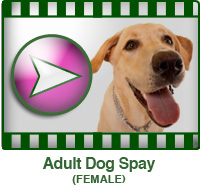
For those of you interested in seeing an actual surgery,
|
 Simply stated, pet overpopulation means that there are more dogs and cats than available, permanent homes. In the greater Los Angeles area, thousands upon thousands of dogs and cats end up in animal shelters each year and are killed for lack of space and lack of existing homes.
 It is Good for Your Pet
 |
|
These surgeries were performed by Dr. W. Marvin Mackie, who opened his Animal Control low-cost spay/neuter clinics in the 1980’s. At that time less than 10% of all pet dogs and 1% of pet cats were sterilized. Dr. Mackie focused on providing safe, high-volume surgical sterilizations including the introduction of what is now referred to as early age sterilization. These videos are of actual surgeries and are provided for information only. Surgery techniques may differ depending upon the veterinarian’s preferences. No one who is not FULLY qualified as a doctor in veterinary medicine should attempt to perform these surgical procedures on any animal under any circumstances. WARNING: Graphic surgery footage! |
|

|
HOW TO OBTAIN SPAY/NEUTER ASSISTANCE
PLEASE NOTE AREA OF SERVICE
Actors and Others for Animals is a Southern California community based organization serving individuals living on a low or fixed income residing in Los Angeles, Orange, Riverside, San Bernardino, Riverside and Ventura counties. If you live outside of this region, we regrettably are unable to help you.
For a list of affordable spay/neuter services throughout California, check out our web-based referral service at www.spaycalifornia.org

You Must Call Personally
Because of the nature of our assistance and the sheer volume of requests we receive daily, all those seeking help must call personally and speak to one of our helpline counselors.Our telephone numbers are:
(818) 755-6045

We Do Not Pay for the Entire Surgery
If you qualify for assistance, you will be directed to a low cost veterinarian in your area who has agreed to work with us to offer lower costs and provided with a financial pledge to help pay for the surgery. Except for special programs, we do not pay for the entire cost.
If your female pet is in heat or pregnant, the cost of the surgery may be higher as well as if your male pet has an undescended testicle and you will be responsible for the additional fee. This means that the absent testicle could be under the skin or inside the abdomen and the veterinarian will have to find it.
We do not provide assistance if you call on the day you bring your animal to the veterinarian. You must be sure to call at least a few days prior to surgery. Due to the uncertainty in trapping feral cats, we will make same day pledges for them. In addition, we are unable to make personal reimbursements or provide financial help after the surgery has been completed.
 Vaccinations and Other Services are the Responsibility of the Pet Guardian
We only provide assistance for the basic spay/neuter surgery. You or the veterinarian may require or request additional services. You will need to pay for such services. As a responsible pet guardian, it is your duty to make sure that your pet is current with all necessary vaccinations. Such vaccinations provide a barrier to many diseases. Many veterinarians require vaccinations prior to surgery. Please contact your local Petco or PetSmart stores for a schedule of low cost vaccination clinics in their stores.
We provide low cost veterinary referrals, which should not be construed as an endorsement of any kind. We do not endorse, recommend or promote any one veterinarian over another. The ultimate decision and agreement to retain the services of the veterinarian we refer you to is your sole responsibility as the animal guardian.

